
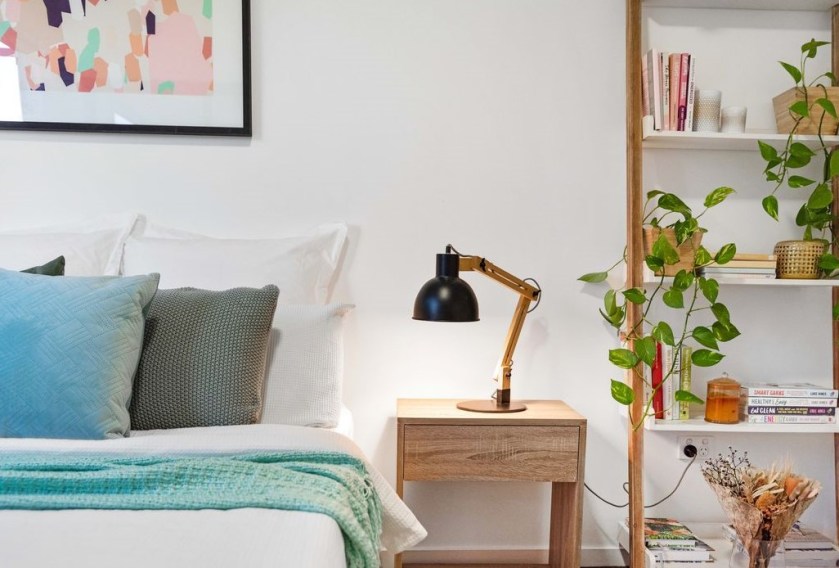
It’s a question that I’m frequently asked during consultations. Clients will show me into an area such as a bedroom or living area and say “Excuse the mess, I don’t know how to make things look good”. If they’re styling their home to sell, that’s easy! I can rattle off a whole list of tips and advice that they can begin to implement effective immediately. Wham, bam and we’re ready to launch on the market, with a property that’s styled to sell.
If they’re styling their home to stay, they normally have an interest in interior decorating but have reached a point of disillusionment, and can’t understand why their own home hasn’t ‘come together’ the way they expected it to. The latter type of client is the more complex of the two, as providing advice to someone on styling their own home requires a reasonably good understanding of who they are and what they value and appreciate in their lives. This takes time, conversation and observation.
The first thing that I try to do is to discover what it is they actually want their interior to look and feel like. Albert Hadley once said “A room should feel collected, not decorated”. With the uprise of social media platforms such as pinterest and instagram, this sentiment has been lost amongst many who look to improve the interior aspects of their own homes. It’s one thing to decorate a vacant house for sale, but it’s quite another to curate pieces within your own home that feel cohesive yet meaningful.
A room should feel collected, not decorated
Albert Hadley
Unpacking this with clients can take time. Thoughtful conversations and questions can go some way towards helping a client understand the difference between the two. Take the ‘downsizers’ for example; an older couple moving from the large home where they raised their children into a smaller place that they can manage as part of a quieter lifestyle. They are having to make significant and stressful decisions around parting with family heirlooms and antiques; buffets, dressing tables, china cabinets and more. “Do we take them? We don’t want to get rid of them but we don’t have room. Our children don’t want them, but we don’t want to get rid of them. They’re such good quality.” Delicate conversations around big decisions. First world problems indeed, but they are problems all the same.
Value is a relative term. I am careful in conversation, to not necessarily attribute money to the value of these pieces. Instead, when we discuss them, it’s a conversation around why the pieces are important. More often than not, these clients soon come to a realisation that some of the pieces aren’t actually of as much value to them in this next stage of their life. Often, buffets and dressing tables seem less important due to an increased focus on storage and good design in their next purchase. They’ve learned from their mistakes. Through conversation, the pieces of actual value emerge above others, and the focus shifts towards incorporating those into their next home. Generally, it gets easier from here.
The next stage of the consult shifts to a discussion about style. “Ok, well, we definitely want the antique china cabinet to come, but won’t it look out of place in our new home, when everything is white and neutral?”. In these situations, I often ask myself (and sometimes my clients), “What do we mean by ‘out of place’ “?
It is quite an easy fix for me to arrange the contents of a china cabinet to enhance it’s appeal and to integrate it in with the rest of it’s surrounds. Continuity of colour, texture and an abundance of light are all contributing factors. If the rest of the interiors and decor throughout the home are white with clean lines, and we have a Queen Anne style china cabinet, then introducing a beautiful white orchard, a ginger jar, and white or neutral picture frames can help to tie this in with its surrounds whilst still allowing it to stand proud as the ‘hero’ piece of the room. Working through each area of a room with this approach will go a long way towards giving you an integrated, cohesive feel to your interiors.
You generally won’t see your individual pieces in an interior magazines, but you know what? That’s because your interiors should reflect the layers of your life that you have built. Gifts, travels, memories and treasures are the things that remind us of who we are, and what our story is. Yes, you can decorate your interiors but if it’s for your own home that you are living in and enjoying, then try to do it with pieces that you have collected, and that have meaning and a deeper value. You might find that you’re not actually doing anything wrong at all.

 firstimpressionspropertystyling.com