
If you’re one of the lucky ones to still have a job during the Covid-19 pandemic AND your able to do it from home, congrats! For those who already work from home on a regular or irregular basis, you’d have a comfortable little arrangement going on that suited your own needs just perfectly and for the rest of you, you’re flying blind.
Regardless of which category you fit into, there’s likely to be some adjustments that you’ve had to make. You may now have some new co-workers (spouses and children), or you might have to actually appear presentable during work hours now that you’re expected to attend 10 zoom meetings per day, instead of working from your laptop in bed while watching Grey’s Anatomy. It’s interesting times indeed.
These changes to our working from home environment, coupled with having to learn new technology and adapt to change at a rate that many of us have never experienced in our lifetime, alongside the threat of a new and unknown virus on our doorstep makes for a heightened state of stress and anxiety in most of us.
Our physical environment has a lot to do with how we feel, so its important to pay attention to how you’ve set yourself up to work from home, to give you the best chance of maintaining a physically and mentally safe working environment. The work station needs for each job varies, so my suggestions are really targeted towards the average desk-based office worker, and school based children.
The Basics
Each person needs to have their own ‘work station’. For those living in a small space, this can be a challenge. You don’t necessarily need your own desk, but you do need one that’s large enough to accommodate the all important coffee cup, a computer and/or notepad for each person, and access to a shared printer. This could be a large dining table or even a temporary trestle table set up in a garage or undercover area if you need separation from the rest of the house (because kids).
Appeal
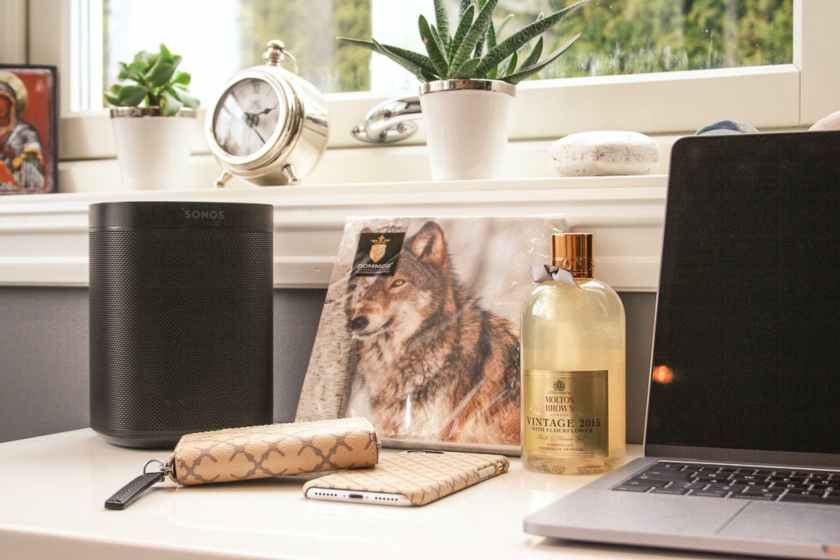
Unlike current world events, the way your work space feels is entirely within your control. Introducing small elements of beauty to whatever set up you have can make an immense difference to how it ‘feels’, which in turn, can play a big role in helping you maintain a positive and calm outlook in a time of great uncertainty and change.
A scented candle, a floor rug, some artwork or pictures along with an indoor plant (or two) and flowers from your garden or from your morning walk are small and inexpensive ways to create a space that feels good to be in. Invest time in making your space one that you actually want to be in and you will not regret it.
Get Organised
Create a routine for your work or school/study days, starting with what you do first thing in the morning. Admiral William H. McRaven delivered an incredible speech to a University of Texas class that explained the importance of such tasks that’s really worth a watch.
Do your work, set regular breaks, consider making time for ‘coffee catch ups’ via facetime etc. Define a time at the end of the day to finish your work, and actually finish at this time. Sounds simple, but it requires discipline to adhere to.
Be sure to keep a tidy space where you can. Sort your stationery into drawers, jars or storage containers. Keep a fresh stock of paper, print cartridges, staples, paperclips and document holders. If you don’t have these things, don’t stress! There are plenty of retailers still providing no-contact delivery options.
School space
Disclaimer – I am not a teacher! I do not pretend to be, nor do I want to be. Unfortunately, this is yet another task that many of us are facing over the coming weeks. My suggestions to you stem from my professional experience in organising and zoning areas and functional spaces, along with my experience as a parent, and from suggestions raised by teachers during this crisis.
- create a space for the kids to do their school work that includes desk space and a chair for each child.
- start with a routine for each day and visually display it on a whiteboard, black board, chalk board, piece of paper, or even on a glass window with removable marker.
- Encourage your children to set up their own workstation – fresh water, a fruit snack and any items they might need (calculators, pencils, sharpeners, text books etc). Creating functional work spaces means more productivity.
- create a space for them to put their stationery, books and arts and crafts supplies. A small kitchen trolley with drawers and wheels has been ideal for our purposes, but you might need something different for your own child’s needs. If they can see what they need, they’ll be able to move through their tasks at a smoother pace.
Down time
We could find ourselves with these working from home arrangements for some time as the world waits for a solution to the covid crisis. Even if a cure is found next week, one thing is for certain – it has changed the way we do business. Workplaces are discovering that it IS possible to have more people working from home more regularly, so we can expect to see a lot more of it in the future.
This means, we need to make sure that we can work from home sustainably, and productively going forward. From a health perspective, this means prioritizing mental health. Make sure you carve spaces out at home that are ‘no go zones’ for work. It’s very important to keep these areas separate to work and study, so that you can mentally switch off when taking a break or knocking off for the day.
In smaller households, this could be an outdoor area, bedrooms or even the corner of a living room, where phones are left elsewhere and you dedicate your mental energy to reconnecting with yourself, your family or your pets.

 firstimpressionspropertystyling.com